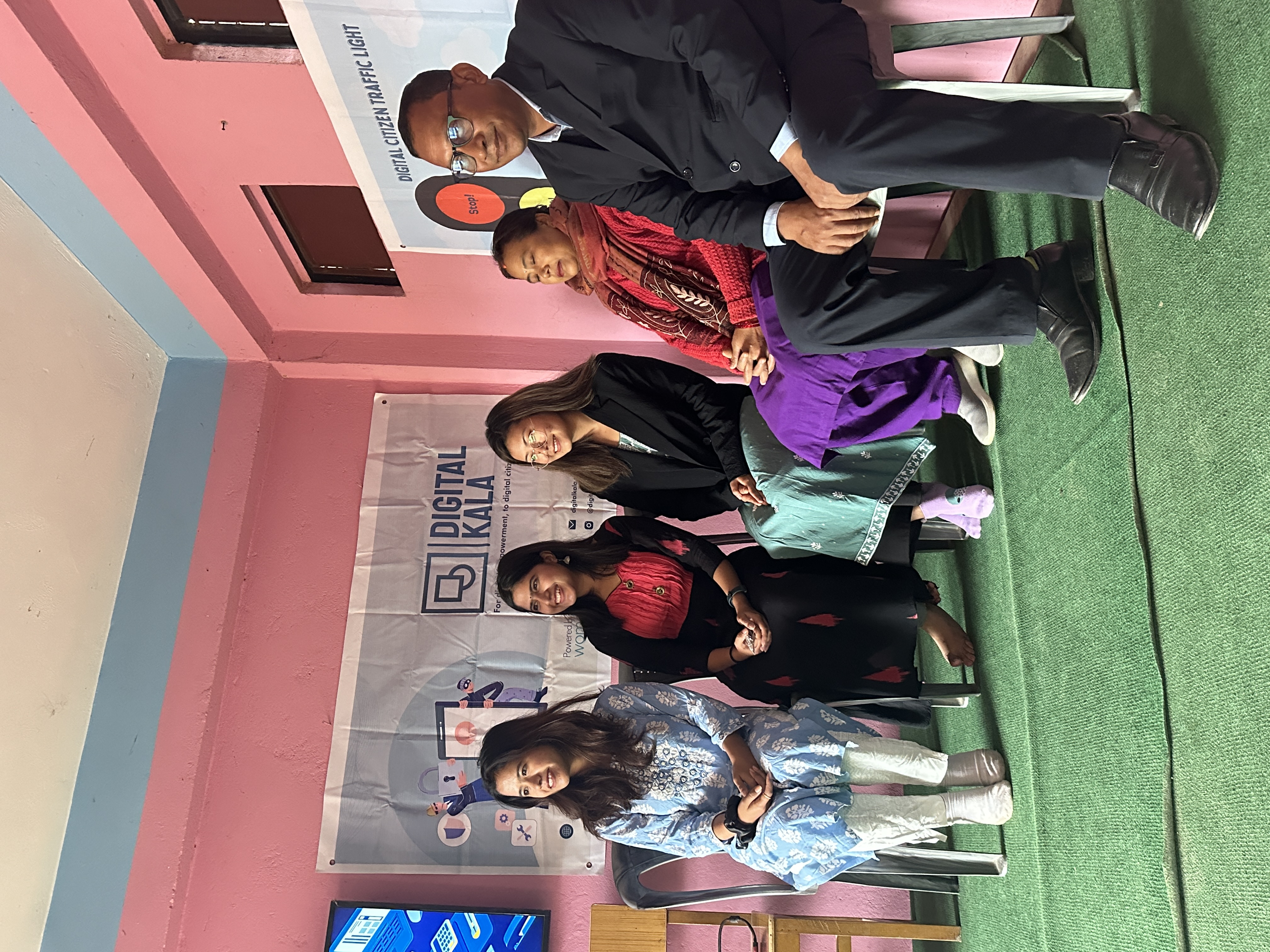
Case study · Community outreach

Digital Kala in Lumbini Province

Five partner sites. Three hundred twenty-three people. One founding story.

Kapilvastu & Dang, Nepal · Nov 2023 - Mar 2024 · Funded by the Sujata Baskota Changemaker Award, Women LEAD Nepal

323
people reached across the province
5
partner sites in Kapilvastu & Dang
216
students received completion certificates
44→92%
now know how to access support
Why Lumbini

The digital gap widens fastest where support is thinnest

Rural Nepal comes online faster than most infrastructures can keep up. Phones and platforms arrive before the safety habits that make them liveable: how to spot a phishing message, how to protect a password, how to report cybercrime through Nepal's official channels. In Kapilvastu and Dang, that gap is wider than it is in the capital, and it lands hardest on students, women, and community organizations who are the first in their households to be online.

Digital Kala's founding project - funded by the Sujata Baskota Changemaker Award from Women LEAD Nepal, established in memory of the late 2012 LEADer Sujata Baskota - was designed to close that gap in the places where partners were ready to open the doors.

Built with

Five partner sites, one shared curriculum

The programme ran across five partner institutions:

  • Youth Club of Labani - Kapilvastu
  • Janajyoti Vidyamandir - Ghorahi, Dang
  • Siddhartha Secondary Boarding School - Maurighat, Dang
  • Rotaract Club of Kapilvastu
  • Dalit Samajik Bikas Kendra - Dangari, Kapilvastu

The team delivered two formats. Community groups received a two-day hands-on workshop. Schools received a one-day awareness session. Every venue got the same core curriculum but with delivery adapted to the audience in front of the team.
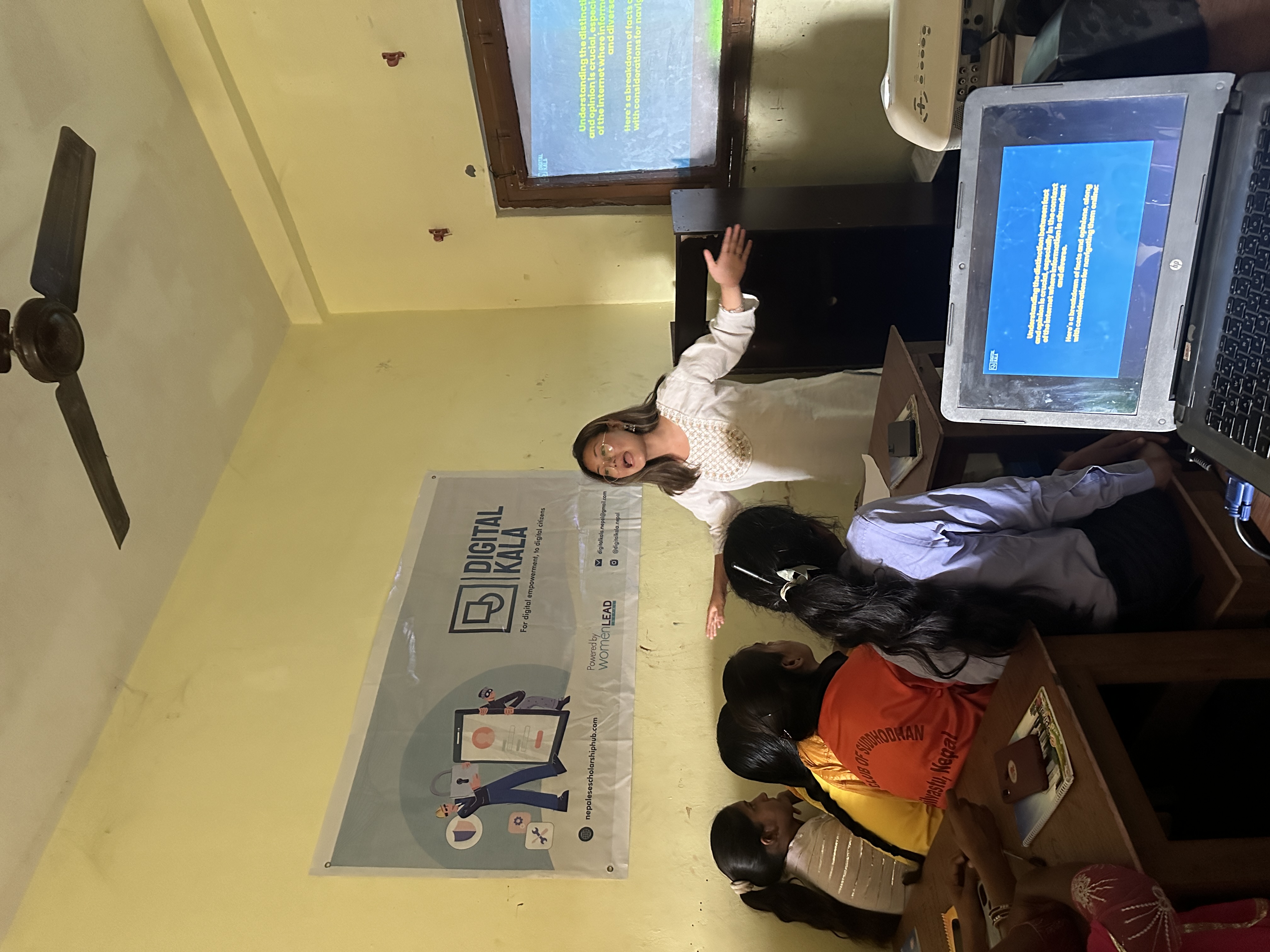
In the classroom

What we taught, how we taught it

Content covered the pieces of digital life that were missing from most participants' existing training: knowing how to act, not just knowing what exists.

The curriculum

Cybercrime, phishing, passwords, private data, digital citizenship

The core was reporting cybercrime through Nepal's Cyber Bureau - the official channel most participants had never heard of before the session. Around that, the team layered phishing recognition, password strength, private-data hygiene, and what it means to be a good digital citizen. One activity used A4-size paper cards to physically demonstrate end-to-end encryption - a piece students still recalled in the follow-up conversations.

Adapting on the spot

The slides did not survive contact with the room

At Dalit Samajik Bikas Kendra, language became a barrier the team hadn't planned for. English-language slides landed poorly with participants whose comfort language was Nepali. The team retranslated the slide deck into Nepali on the spot and rebuilt the session mid-delivery. That kind of on-the-ground adaptation - not a curriculum change on paper, a change in the room - was the pattern that made the programme work.

Outcomes

Numbers that moved. Doors that opened.

At the start of the programme, 44% of participants knew how to access support against online threats. By the end, 92% did. Confidence in safeguarding personal information rose from 70% to 94%. And every participant pledged to lead digital-safety conversations in their school or family - up from 75% at baseline.

The signal that mattered most was what happened after the sessions ended. Teachers at Janajyoti Vidyamandir invited the team back for repeat sessions. The president of Rotaract Kapilvastu asked for a session at her own school. Word-of-mouth invitations - not a marketing plan - carried the programme into its next chapter.

Dipa leading a session at Labani, Lumbini
What's next

Repeating in the sites that invited us back, expanding to new ones

The next phase deepens the work at the sites that requested return visits, and extends the same two-format model (two-day community workshops, one-day school sessions) to new districts. The curriculum has been rewritten based on what the 2023 cohort taught the team: more time on cybercrime reporting, more localized examples, and where possible, delivery in the participant's comfort language from the start.

Help us reach the next province.

Fund the next Lumbini-style outreach, host a session with your school or club, or connect us with community organizations in districts we haven't yet reached.

Partner with us
Keep reading

More of our work

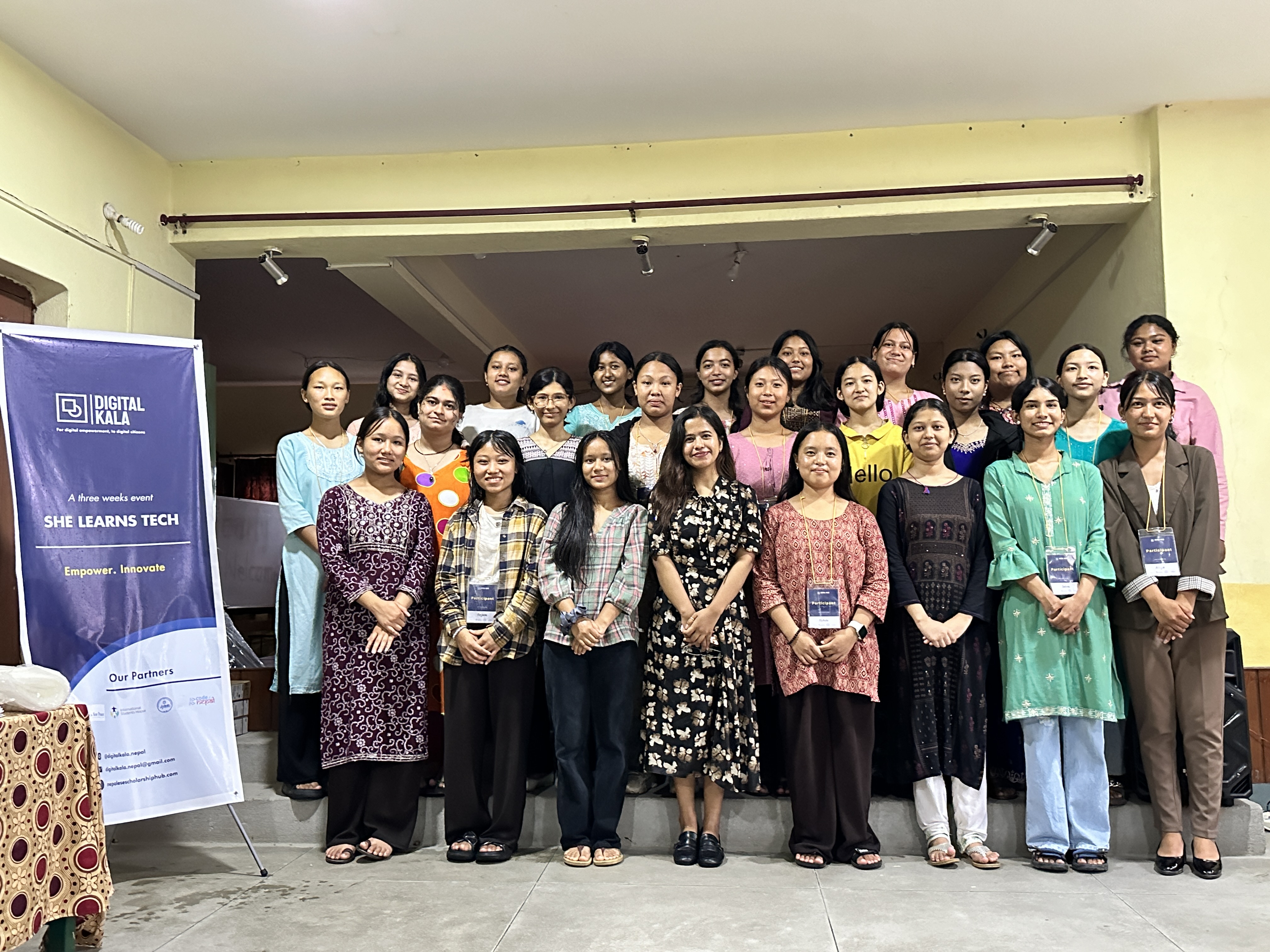
She Learns Tech participants at Mary Ward School
Case study · Flagship program

She Learns Tech at Mary Ward School

Three weeks, 23 young women, programming and career skills at Nepal's Mary Ward School.

Read the case study
Group photo at Janajyoti Vidyamandir, Ghorahi
Impact

Numbers, timeline, honest reflections

What we've measured, what we're still verifying, and where the partner network stands today.

See our impact